
Photorealistic vs artistic 3D exterior rendering comes down to communication purpose: photorealistic renders use physically based materials, ray-traced global illumination, and calibrated virtual cameras to reproduce a building as it will physically exist, while artistic renders use stylized lighting, simplified material palettes, and illustrative post-production to communicate mood, massing, and design intent. Choose photorealism when buyers, lenders, or planning boards need to judge accuracy, and choose an artistic style when early-stage concepts, brand storytelling, or rapid design iteration matter more than literal fidelity. Most developers get the strongest results by matching the style to the project stage, using artistic visuals to explore ideas and photorealistic visuals to sell the project and win approvals.
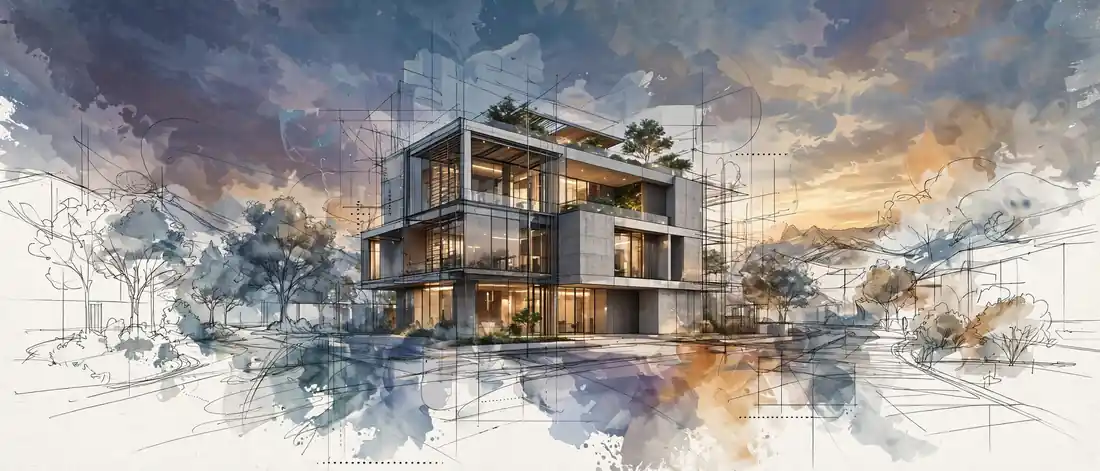
If you already know which direction your project needs, our team delivers both looks from a single approved 3D model through professional real estate rendering services built on physically based rendering and stylized visualization workflows. If you are still deciding, this guide walks you through the differences, the costs, the right moments for each style, and the mistakes we see most often.
Quick Answer: Photorealistic vs Artistic 3D Exterior Rendering at a Glance
Before the detail, here is the short version that most readers are looking for.
- Photorealistic rendering looks like a photograph of the finished building. It is best for sales, marketing, lender presentations, and planning approvals.
- Artistic rendering looks like an illustration, watercolor, sketch, or stylized 3D scene. It is best for early concepts, competitions, branding, and design exploration.
- Hybrid rendering blends both: a realistic building with an illustrative setting, or a realistic hero view paired with sketch-style supporting views.
- Cost and speed: artistic styles are usually faster and cheaper at the concept stage, while photorealism needs more modeling detail, material work, and render time.
- Best rule of thumb: use the style that answers the question your audience is asking. If they ask “What will this look like?”, use photorealism. If they ask “What is the idea?”, use an artistic approach.
Why This Choice Matters More Than Most Developers Expect
Choosing between styles looks like a purely aesthetic decision. In practice, it shapes how stakeholders read your project.

A render is a promise. A photorealistic image tells the viewer, “This is what you will get.” An artistic image tells the viewer, “This is the vision.” When the style does not match the stage of the project, the audience reacts in the wrong way. Buyers may feel misled by an overly polished image of an unfinished design. Alternatively, a planning board may feel uncertain when a loose sketch is presented as a final proposal.
Therefore, the right style protects three things:
- Your credibility, because the image sets accurate expectations.
- Your budget, because you spend detail only where it pays back.
- Your timeline, because the wrong style often triggers rework late in the process.
If you want broader context on how renders fit into the design and sales process, our overview of what architectural rendering is and how it works is a useful starting point.
What Is Photorealistic 3D Exterior Rendering?
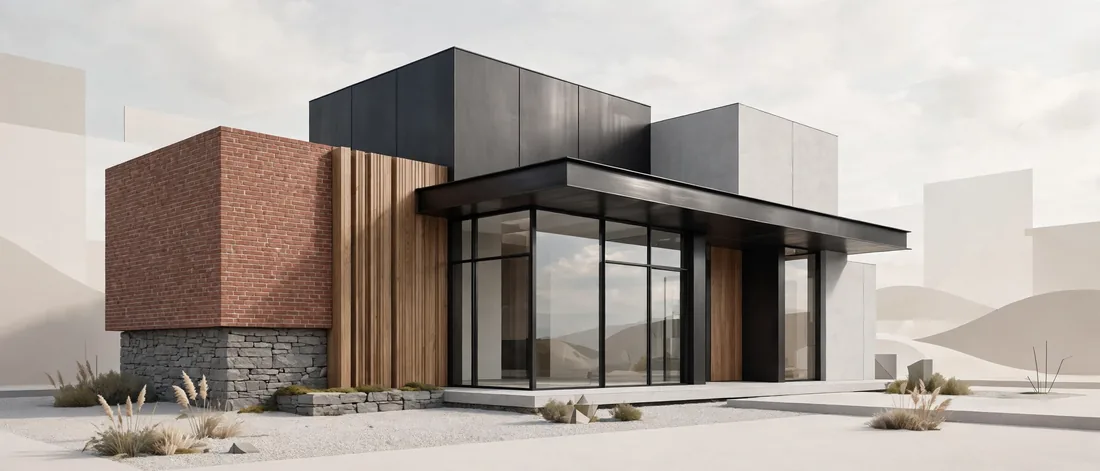
Photorealistic 3D exterior rendering is the process of producing an image of a building that is visually indistinguishable from a real photograph, using accurate geometry, physically based materials, real-world lighting, and camera-correct perspective.

The goal is fidelity. Every surface behaves the way it would on site: brick absorbs and scatters light, glass reflects the sky, and metal cladding shows subtle highlights along its edges.
Key Characteristics of Photorealistic Renders
- Physically based materials (PBR): brick, timber, stone, glazing, and metal respond to light with correct reflectivity and roughness.
- Global illumination: light bounces between surfaces, which creates natural soft shadows and color bleed.
- Accurate time of day and sky: sun angle, haze, and cloud cover match a believable location.
- Camera realism: correct lens focal length, depth of field, and exposure, similar to architectural photography.
- Context detail: landscaping, vehicles, people, and neighboring buildings add scale and credibility.
The Technology Behind It
Photorealism relies on ray-tracing engines such as Chaos V-Ray, which simulate how light travels through a scene. The engine calculates reflections, refractions, and shadows for every surface, and the results look natural because the math mirrors real physics.
Where Photorealism Shines
- Pre-sale marketing for homes, townhomes, and apartment buildings
- Sales brochures, websites, and billboards
- Lender and investor presentations
- Planning submissions where accuracy is scrutinized
- Final design approvals with homeowners or clients
What Is Artistic 3D Exterior Rendering?
Artistic 3D exterior rendering is a stylized visualization approach that prioritizes mood, composition, and design intent over literal accuracy, using techniques such as simplified materials, painterly lighting, sketch overlays, and illustrative post-production.
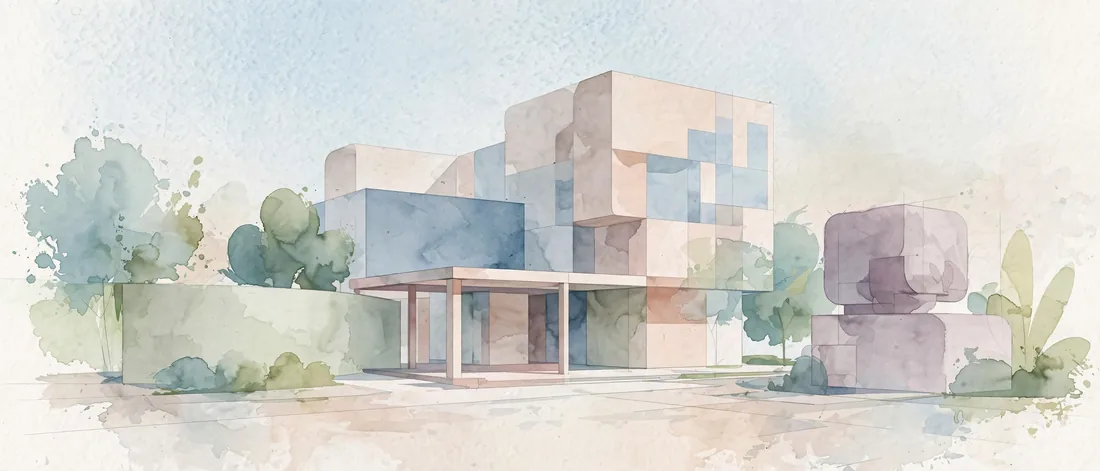
Instead of asking “Does this look real?”, an artistic render asks “Does this feel right?” The building is still modeled in 3D, so proportions and massing remain accurate. However, the finish is deliberately interpretive.
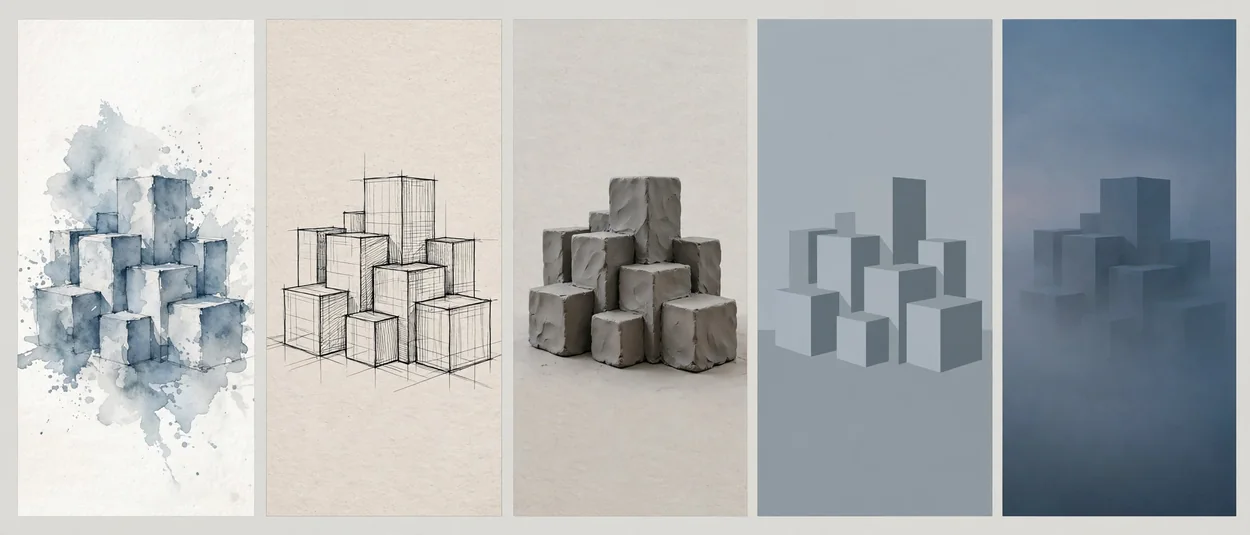
Common Artistic Styles
- Watercolor or painterly: soft edges, washed color, and visible brush texture.
- Sketch or line-art overlay: a 3D model rendered with hand-drawn linework, popular for early concepts.
- Clay or monochrome massing: a single neutral material that focuses attention on form and shadow.
- Illustrative 3D: clean, flat-shaded scenes with a limited color palette and stylized people and trees.
- Atmospheric or cinematic: dramatic dusk lighting, fog, or color grading that emphasizes emotion.
Where Artistic Rendering Shines
- Concept presentations before materials are final
- Architectural competitions and design pitches
- Brand storytelling and lifestyle marketing
- Community engagement sessions where flexibility is important
- Projects where the design is expected to evolve
Artistic rendering also has a practical advantage: it signals that the design is open to feedback. A loose sketch invites conversation, whereas a polished photorealistic image can discourage it.
Photorealistic vs Artistic 3D Exterior Rendering: Side-by-Side Comparison
The table below summarizes how the two approaches differ across the factors that matter most to developers, architects, and homeowners.
| Factor | Photorealistic Rendering | Artistic Rendering |
|---|---|---|
| Primary goal | Show the finished building accurately | Communicate mood and design intent |
| Best project stage | Final design, pre-sales, approvals | Concept, schematic design, pitches |
| Material detail | High: PBR textures, exact finishes | Low to medium: simplified or stylized |
| Lighting | Physically accurate daylight or dusk | Stylized, dramatic, or flat |
| Input needed | Detailed plans, finish schedules, site data | Massing model, basic plans, reference mood |
| Typical turnaround | Longer, because of detail and render time | Shorter, because of simplified finishing |
| Revision impact | Material or geometry changes need re-rendering | Easier to adjust at the concept stage |
| Audience reaction | “This is what we are buying.” | “This is the vision.” |
| Risk if misused | Over-promises on an unfinished design | Under-sells a design that needs to look real |
| Typical budget position | Higher per image | Lower per image at concept stage |
How Each Style Is Produced: The Workflow Difference
Both styles start in the same place. A 3D model is built from your plans, and the model becomes the foundation for every image. The split happens after modeling, in how the scene is finished.

Photorealistic Workflow: Step by Step
- Collect inputs: floor plans, elevations, material schedules, site plan, and reference photos.
- Build the 3D model: accurate geometry in software such as Autodesk 3ds Max or similar platforms.
- Apply PBR materials: assign real-world finishes with correct scale and reflectivity.
- Set up lighting and camera: choose sun position, sky, lens, and composition.
- Add context: landscaping, vehicles, people, and surrounding buildings.
- Render and review: produce test renders, then final high-resolution images.
- Post-production: color correction, atmosphere, and subtle enhancements.
Artistic Workflow: Step by Step
- Collect inputs: massing model, basic plans, and a mood reference.
- Define the style: watercolor, sketch, clay, or illustrative.
- Build or adapt the model: focus on form, proportion, and silhouette.
- Set stylized lighting: strong shadows, soft gradients, or flat color.
- Render base passes: line work, shadow passes, and color layers.
- Composite and paint: blend passes, add illustrative entourage, and refine mood.
- Review and adjust: change style or composition quickly.
In our studio experience, the artistic workflow tends to move faster in the early review rounds because there are fewer finish decisions to lock in. In contrast, the photorealistic workflow rewards careful preparation, since a late change to a facade material can mean re-rendering several views.
When to Choose Photorealistic 3D Exterior Rendering
Photorealism is the right tool when your audience needs to trust what they see. Consider it in the following situations.
1. You Are Selling Before Construction
Buyers rarely commit to a purchase based on a sketch. They want to see the front door, the landscaping, and the way light hits the facade at golden hour. Photorealistic renders make that experience tangible, which is why they remain central to off-plan marketing. If this is your situation, read how developers use visuals to win approvals and accelerate sales with 3D renderings.
2. You Need Planning or Regulatory Approval
Planning boards and community groups evaluate scale, materials, and neighborhood fit. Photorealistic images placed in a real site context help them judge impact accurately. Moreover, accurate renders reduce misunderstandings that can slow an application.
3. You Are Presenting to Lenders or Investors
Financing decisions rely on confidence. A photorealistic render shows that the design is resolved and that the team has done its homework.
4. Finishes Are a Selling Point
If the stone cladding, timber screens, or custom glazing are what make the project special, you need photorealism to show them honestly.
5. Your Marketing Needs to Compete with Real Photography
Websites, brochures, and listings are full of professional photos. A photorealistic render allows your pre-construction project to sit comfortably next to them.
Quick Checklist: Is Photorealism Right for You?
- The design is largely final.
- Materials and finishes are selected.
- The audience includes buyers, lenders, or regulators.
- You need images for web, print, or signage.
- Accuracy matters more than interpretation.
If you tick three or more boxes, photorealistic rendering is likely the better fit.
When to Choose Artistic 3D Exterior Rendering
Artistic rendering is not a lesser option. It is a different tool for a different job.

1. You Are Still Exploring the Design
During concept development, the design changes often. Artistic renders let you test massing, orientation, and composition without paying for detail that may be discarded.
2. You Are Entering a Competition or Pitch
Judges and clients respond to ideas, atmosphere, and storytelling. A well-crafted illustrative image can communicate a bold concept more effectively than a literal render.
3. You Want to Invite Feedback
A sketch-style image signals that the design is not locked. Community consultations and early client workshops benefit from that openness.
4. Your Brand Calls for a Distinct Visual Identity
Some developers and architects want a recognizable look across all their marketing. A consistent illustrative style can become a signature.
5. You Need Speed on a Tight Schedule
When the deadline is close and the decision is conceptual, artistic rendering delivers clear visuals faster than a full photorealistic pipeline.
Quick Checklist: Is an Artistic Style Right for You?
- The design is at concept or schematic stage.
- Materials are not final.
- You want to encourage discussion.
- Mood and story matter more than precision.
- The timeline is short.
If most of these apply, an artistic approach will likely serve you well.
Which Rendering Style Fits Each Project Stage?
The most reliable way to decide is to look at where the project sits. The table below maps common stages to the style that usually works best.
| Project Stage | Typical Goal | Recommended Style | Why It Works |
|---|---|---|---|
| Concept / feasibility | Explore massing and idea | Artistic (clay or sketch) | Fast, flexible, low commitment |
| Schematic design | Align on direction | Artistic or hybrid | Mood is clear, details can still change |
| Design development | Test materials and facade | Hybrid | Realistic building, simplified context |
| Planning submission | Show accurate impact | Photorealistic | Scale and materials must be credible |
| Pre-sales marketing | Drive buyer confidence | Photorealistic | Buyers need to picture the finished product |
| Brand or lifestyle campaigns | Build emotion | Artistic or cinematic photorealistic | Story drives engagement |
| Final handover or listing | Show the completed vision | Photorealistic | Matches real photography standards |
Cost, Timeline, and Revision Impact: Photorealistic vs Artistic 3D Exterior Rendering
Budget often decides the style before design preferences do. Therefore, it helps to understand what drives the price.

What Affects Cost in Both Styles
- Number of views: each additional angle adds modeling, rendering, and post-production effort.
- Model complexity: a detailed facade with custom elements takes longer than a simple volume.
- Level of context: landscaping, streetscape, and entourage add time.
- Resolution: large-format print output requires more render time.
- Revision rounds: unlimited changes increase cost in any style.
How the Styles Differ
Photorealistic projects generally cost more per image because they demand fine material work, accurate lighting, and longer render times. Artistic projects usually cost less at the concept stage, though a highly polished illustrative image with custom painting can approach photorealistic pricing. In other words, “artistic” does not automatically mean “cheap.” Style complexity matters as much as style category.
For an overview of what typical projects involve, see our real estate rendering price list.
Where Revisions Hurt the Most
Revisions cost more in photorealistic workflows once materials and camera angles are locked. A change from brick to render on the facade can mean re-rendering every view. By contrast, early artistic images can adapt quickly because the finish is simplified.
Practical Budget Tip
If your budget is limited, consider this approach:
- Start with one or two artistic concept views to lock the design direction.
- Finalize materials and plans.
- Commission one or two hero photorealistic views for marketing and approvals.
This staged approach often produces better results than paying for full photorealism too early.
The Hybrid Approach: Combining Photorealistic and Artistic Styles
You do not always have to choose one or the other. Many strong projects use both.

Popular Hybrid Combinations
- Realistic building, illustrated surroundings: the architecture is photorealistic while the neighborhood fades into soft linework. This keeps focus on your project.
- Hero render plus sketch set: one polished photorealistic image for marketing, supported by sketch-style views for brochures and presentations.
- Photorealistic with cinematic grading: a realistic render with dramatic dusk lighting and color treatment for brand campaigns.
- Painterly overlay: a photorealistic base with a subtle artistic finish for a premium editorial look.
Why Hybrid Works
Hybrid rendering lets you control attention. The realistic part says “this is trustworthy,” while the stylized part says “this is a vision.” It also helps manage budget, because you apply detail only where it matters.
If you want more ideas on how visuals can support different audiences, browse our 3D rendering articles and guides for related topics.
Common Mistakes When Choosing Between Photorealistic and Artistic Rendering
Over many projects, a handful of errors appear repeatedly. Avoiding them can save you weeks and a good deal of budget.

1. Commissioning Photorealism Too Early
When the design is still changing, photorealistic images become outdated fast. You end up paying twice for the same views.
2. Using Artistic Renders for Buyer-Facing Sales Without Context
A loose illustration may inspire, but buyers making financial decisions often need to see realistic finishes. Without them, hesitation grows.
3. Ignoring the Audience
A planning board, a lender, and a lifestyle audience each read images differently. Always ask who will see the render and what decision it supports.
4. Mixing Styles Inconsistently
Using one photorealistic image, one watercolor, and one clay render in the same brochure looks accidental rather than intentional. Hybrid should be a deliberate system.
5. Providing Incomplete Inputs
Photorealism in particular relies on accurate plans, finish schedules, and site photos. Missing information leads to assumptions, which lead to revisions.
6. Forgetting Regulatory Expectations
Some jurisdictions expect accurate visual representations for submissions. Review the guidelines for your location and the professional standards that apply. The American Institute of Architects offers helpful references on the phases of design services and how visual deliverables fit into them.
7. Treating Style as the Only Decision
Camera angle, time of day, and composition affect the result as much as the style label. A well-composed artistic image can outperform a poorly composed photorealistic one.
Expert Tips for Getting the Best Result from Either Style
These tips come from how professional rendering studios typically structure projects.
- Define the decision first. Ask what the image needs to help someone decide.
- Choose hero views carefully. Two excellent images beat six average ones.
- Match lighting to purpose. Warm golden-hour light works well for residential marketing. Clear midday light suits technical or planning views.
- Keep entourage believable. Cars, people, and plants should suit the neighborhood and scale.
- Share reference images. Even three or four references help a studio understand the tone you want.
- Lock materials before final renders. Late changes are the main cause of added cost.
- Request style tests. A small test frame in each style often settles the debate faster than discussion.
- Plan for reuse. One approved model can produce day, dusk, aerial, and street-level views in either style.
How to Brief Your Rendering Studio for Photorealistic or Artistic Results
A clear brief speeds up the project and reduces revision rounds. Use the checklist below when you contact a studio.

What to Include in Your Brief
- Project type and location: for example, a six-unit townhome development in a suburban setting.
- Purpose of the images: sales, approvals, investor pitch, or concept exploration.
- Preferred style: photorealistic, artistic, or open to a recommendation.
- Number and type of views: street level, aerial, entry, or courtyard.
- Materials and finishes: schedules, samples, or reference photos.
- Timeline and delivery formats: web resolution, print resolution, or both.
- Plans and drawings: floor plans, elevations, and site plan.
If you are working with residential plans, our guide on how to prepare home plans for 3D exterior rendering explains exactly which files and details help most.
A Simple Decision Framework: Photorealistic vs Artistic 3D Exterior Rendering
If you are still unsure, answer these four questions in order.
- Who is the main audience?
- Buyers, lenders, or regulators: lean photorealistic.
- Design teams, jurors, or early stakeholders: lean artistic.
- How final is the design?
- Mostly final: photorealistic.
- Still evolving: artistic or hybrid.
- What is the main message?
- “This is exactly what you will get”: photorealistic.
- “This is the idea and the feeling”: artistic.
- How tight are budget and schedule?
- Tight and early stage: artistic first, photorealistic later.
- Flexible and late stage: photorealistic from the start.
When the answers point in different directions, choose hybrid.
Frequently Asked Questions About Photorealistic vs Artistic 3D Exterior Rendering
What is the main difference between photorealistic and artistic 3D exterior rendering?
Photorealistic rendering aims to look exactly like a photograph of the finished building, using accurate materials, lighting, and camera settings. Artistic rendering uses stylized techniques such as sketch, watercolor, or simplified shading to communicate mood and design intent. In short, one proves accuracy and the other conveys vision.
Which is better for selling real estate before construction?
Photorealistic rendering is usually the better option for pre-sales. Buyers want to visualize finishes, landscaping, and lighting, and realistic images give them confidence. Artistic renders can support the campaign for brand storytelling, but they rarely replace photorealistic views for buyer decisions.
Is artistic rendering cheaper than photorealistic rendering?
Often, yes, particularly at the concept stage, because fewer finish details and shorter render times are involved. However, a highly polished illustrative image can cost as much as a photorealistic one. Price depends on complexity, the number of views, and revision rounds rather than style alone.
Can I use both styles for the same project?
Yes. Many developers start with artistic concept views and move to photorealistic images once the design is final. Both styles can come from the same 3D model, which saves time and keeps proportions consistent.
Do planning authorities prefer photorealistic renders?
Requirements vary by location. In many cases, authorities and community groups respond better to accurate, context-rich photorealistic images because they show real scale and materials. Always check local submission guidelines before choosing a style.
How long does each style take?
Artistic renders often take less time in the early rounds, while photorealistic renders need more modeling detail, material setup, and render time. Exact timelines depend on project size and the number of views, so ask your studio for a schedule based on your brief.
What information does a studio need to start?
A studio typically needs plans, elevations, a site plan, material references, preferred views, and the purpose of the images. The more complete your inputs, the fewer revisions you will need.
How do I choose between photorealistic vs artistic 3D exterior rendering if I am unsure?
Start with the audience and the project stage. If your audience needs to trust the final look, choose photorealistic. If you are exploring ideas or inviting feedback, choose artistic. When both apply, a hybrid approach is a safe and effective compromise.
Conclusion: Choosing Between Photorealistic vs Artistic 3D Exterior Rendering
The debate over photorealistic vs artistic 3D exterior rendering is not about which style is better. It is about which style fits your audience, your project stage, and your goals.

Here is the summary:
- Use photorealistic rendering when accuracy builds trust: sales, approvals, lenders, and final marketing.
- Use artistic rendering when ideas, mood, and flexibility matter most: concepts, pitches, and early consultation.
- Use hybrid rendering when you want to control focus and budget at the same time.
- Brief your studio clearly, lock materials before final renders, and match the image to the decision it needs to support.
Ready to turn your design into visuals that convince buyers and win approvals? Request a 3D exterior rendering quote and get your project market-ready with a team that delivers both photorealistic and artistic styles from a single model.