
living-room-3d-interior-rendering-expert-tips

Residential Living Room 3D Interior Rendering: Lighting, Furniture, and Style

Living room 3D interior rendering is the process of generating a photorealistic digital image of a residential living space by applying ray-traced global illumination, Physically Based Rendering (PBR) material shaders, and IES-profiled artificial light sources to a fully modeled 3D scene. Professional studios use rendering engines such as V-Ray and Corona Renderer alongside HDRI environment[…]

Commercial-Real-Estate-3D-Exterior-Rendering

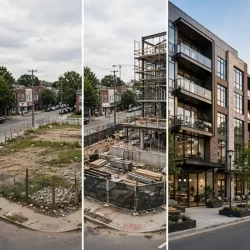
Office Building 3D Exterior Rendering: Best Practices for Developers

Office building 3D exterior rendering is the process of generating photorealistic, physically based visualizations of a commercial structure’s facade, massing, site context, and material palette using parametric modeling software and render engines such as 3ds Max with V-Ray, Lumion, or Unreal Engine 5 – before a single column is poured. For commercial real estate developers,[…]

Visualization-exterior-3D-model-sample-example

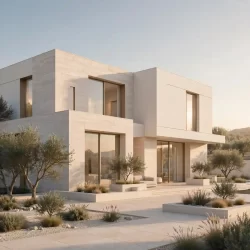
How to Prepare Your Home Plans for a 3D Exterior Rendering

To prepare home plans for 3D exterior rendering, you must supply your visualization studio with a complete, coordinated document package: dimensioned floor plans for every level, all four orthographic facade elevations, a roof plan, section drawings, and a site plan – all delivered in native CAD format (DWG, DXF, or RVT) rather than scanned PDFs.[…]

Real-Estate-3D-Rendering

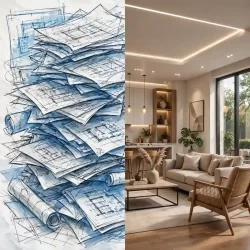
What is the Difference Between 3D Rendering and 3D Modeling?

If you have ever wondered about the difference between 3D rendering and 3D modeling, you are not alone. These two terms get used interchangeably in the real estate and architecture industries – but they describe distinct processes with very different outputs. Understanding where one ends and the other begins can help you make smarter decisions[…]

why-do-real-estate-developers-use-rendering-services

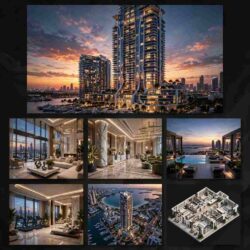
How Top Real Estate Developers Win Approvals and Sales Using 3D Renderings

Top real estate developers use 3D renderings to secure municipal approvals, align stakeholders, and maximize pre-sales velocity by converting complex architectural data into undeniable visual proof. By presenting photorealistic, high-fidelity visualizations before breaking ground, developers eliminate ambiguity for planning committees, de-risk investments for capital partners, and compress the sales cycle through high-impact pre-marketing. In today’s[…]

Content is protected.